
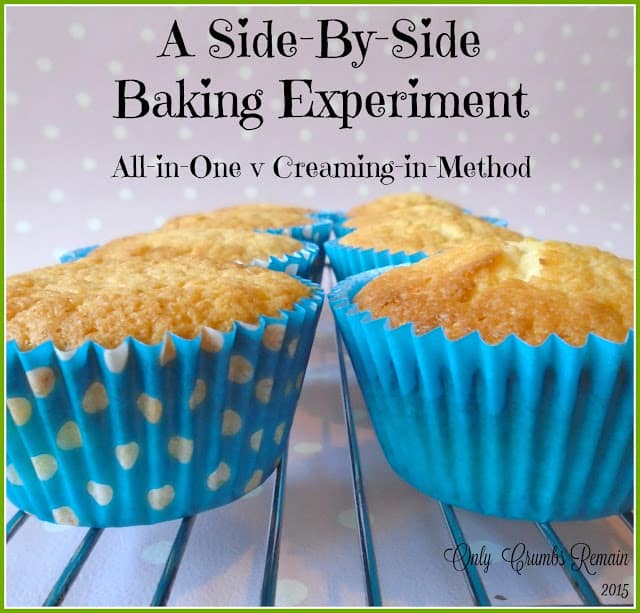
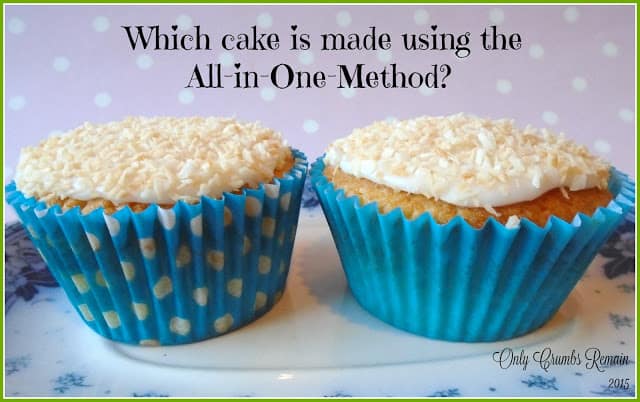


So let's get to it and bake!
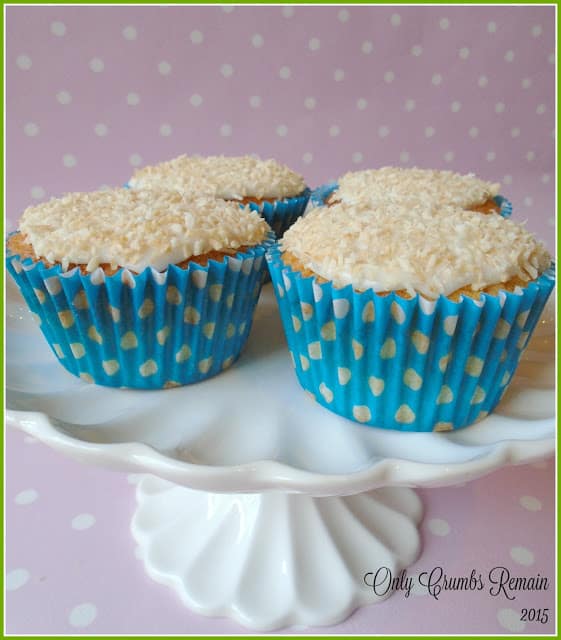
Victoria Sponge Cupcakes decorated with a Water Icing and Toasted Coconut. Yum
Yield: 6 muffin size cupcakes
Serves: 6
Difficulty: Easy
Time: hands on time 20 minutes; plus 20 minutes bake time; cooling time
Freezable: Yes, undecorated
You will need:
Electric Hand Held Beater
Sieve
Spatula or large Metal Spoon
Muffin size Paper Cases
Muffin Baking Tray
Frying Pan
For the sponge mixture
90g Unsalted Butter, softened
45g Golden Caster Sugar
45g Caster Sugar
2 Eggs, lightly beaten
90g SR Flour, sieved
1 - 2 tablespoon milk
For the Water Icing and toasted coconut
70g Icing Sugar
Water
1 - 2 handful of Desiccated Coconut
How to make them:
1. Pre-heat the oven to 190c / Fan 170c / Gas 5. Place the muffin cases into the muffin tray.
2. Make the sponge. Use either the creaming-in-method OR the all-in-one method.
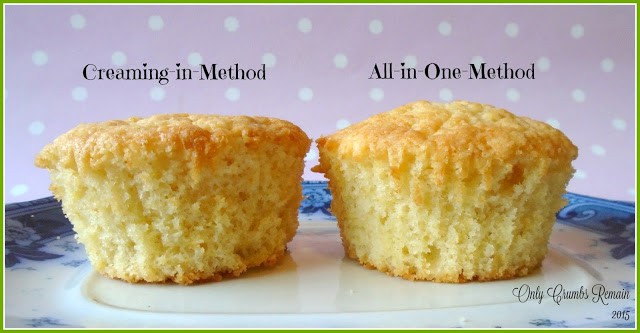
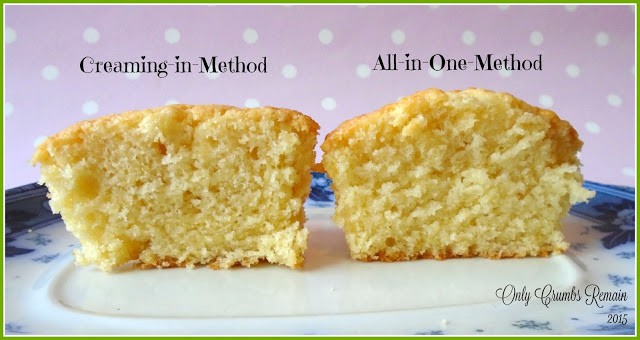
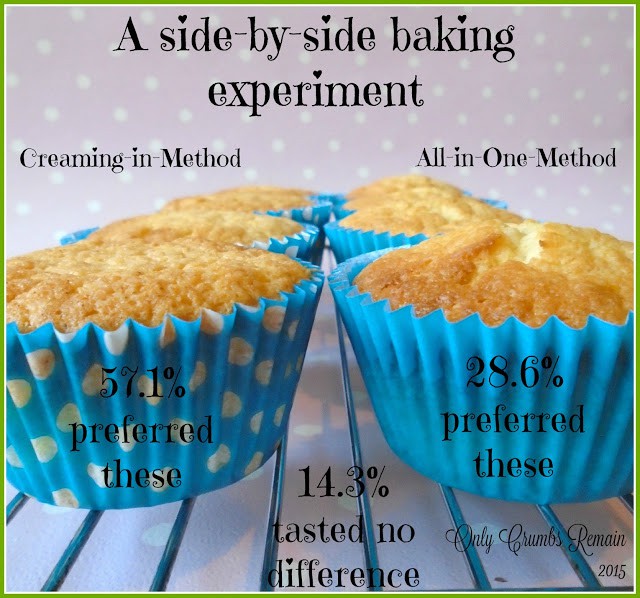
Creaming-in-Method: Place the softened butter and sugar into a good sized bowl and beat together with a wooden spoon or electric beaters until pale and fluffy. Gradually add the beaten egg a little at a time, beating well after each addition. Beat in the milk. Sieve the flour into the mixture. Using a spatula or large metal spoon fold this in gently.
All-in-One Method: Place the eggs into the bowl & lightly whip to break them up. Add the very soft butter, sugar, milk and flour. Use the beaters to blend the ingredients together. Avoid over mixing.
3. Fill the muffin cases. Using a teaspoon, fill the cases with the batter mixture. You're aiming for them to be half to two-thirds full. You may decide to weigh each muffin to ensure equal sizes. Each cupcake will weigh about 57g - 58g.
4. Bake. Place the muffin tray in the centre of the oven and bake for about 20 minutes. You may need to rotate the tray after 15 minutes of baking. Once baked, remove from the oven and place on a cooling tray.
5. Toast the coconut. Place the frying pan over a medium heat on the hob (no oil required). Add 1-2 handfuls of the desiccated coconut. Spread it out into an even layer. Use a wooden spoon to regularly move the coconut around to avoid it burning. Once the coconut is a lovely golden colour tip into a bowl and se aside to cool.
6. Mix the water icing. Place the icing sugar into a small bowl. Add a teaspoon of water and mix together. Add drips of water until a thick but spreadable paste is achieved.
7. Decorate the cupcakes. Place a teaspoonful of the icing onto a cupcake. Use the back of the teaspoon to gently spread the water icing over the top of the cupcake. Holding the cupcake around its sides, tip it upside down and gently dip the iced face into the toasted desiccated coconut. Set aside to allow the water icing to firm up. Repeat with the remaining cupcakes.
Enjoy!

Angie Owen says
I too prefer the creaming method for light sponges. However when making a denser traybake such as Mary Berry’s ginger and treacle tray bake the all in one method gives a better result.
Jacqueline Bellefontaine says
I think there is a place for using the all in one method but for a light sponge cake personally I will always stick to the creaming method as it gives consistently good results
Frances Lothian says
I have just tried the same experiment myself. But with two sandwich tin pans to make a Victoria sponge cake. Only I will know whether the top or bottom sponge is creamed or all-in-one. But I will be asking for feedback. I think the butter wasn't quite soft enough for the all-in-one as it stayed in lumps and I had to beat the mix for longer than I liked given the possibility of activating the gluten.
The creamed sponge looks ever so slightly darker. It rose just slightly more than the all-in-one. The taste test showed that both are delicious! The creamed method is slightly softer and spongier. So creamed method proved superior but by such a slight margin is it worth the extra effort? Only if I was entering a cake baking competition!
Additional note: my usual mix for victoria sponge is equal parts eggs, butter, sugar, flour. I cut down on sugar and only put in 100g instead of 120g. It was just as sweet as usual, no one complained. I will be cutting back the sugar in future.
Jacqueline Bellefontaine says
Hope you enjoyed your experiment. I find it's always interesting to try and compare different methods. And well done reducing the sugar slightly. Don't cut back too far there is a tipping point when the cake will fail
Amanda says
Interesting comparison, thanks for sharing as I've been wondering the same. I read somewhere that all-in-one methods rely on leavening agents more than creaming ones for their rise. I was wondering if or how I could convert a recipe from creaming to all-in-one. Perhaps they need just need a little extra baking soda. The less mixing with the all in one may mean the sugar is not dissolved as well as the creaming method too, so perhaps using caster sugar is important. I have noticed my all-in-one chocolate sponge despite having good texture often gets those bubbles on top. I will continue to experiment 🙂 Thanks again.
.
Jacqueline Bellefontaine says
Yes generally I think adding a little extra baking powder is the trick to keep it light ( usually add ½ tsp baking powder to 2 egg mixture) and would agree on the importance of caster over granulated sugar, although over the years I have found granulated sugar is not as course as it used to be.
I think those little bubble you refer to are down to the baking powder which can cause larger bubbles of air than those you incorporate when using the creaming method only which tend to be smaller and more evenly spread through the mixture.
Still it is always fun to experimenting and thank you for your feed back
Paula Holden says
I discovered the 'all in one' method quite by accident as a child ! Making sponge cakes was one of the first things I learned to bake with my mam. I think I would have been about 11 or 12 and accidentally put the flour, sugar and butter all in together , thinking this was going to ruin the whole thing I was a bit upset but decided just to put everything in together and see what happened . I remember to my and my mams astonishment the sponge came out light ,fluffy and delicious . Ever since then we have both carried on using this method ! I am now 53!
Jacqueline Bellefontaine says
Its great when a mistake turns out well isnt it. I interchange between the methods I use. This post was actually written by my predecessor at Only Crumbs I took over the blog at the begining of this year. I learnt about the all in one method while doing a student work placement at Family Circle magazine ( you may remember that ). Mary Berry often featured in the magazine so im not surprised she uses the method. In fact I may have been testing the method for one of her articles.
Robyn says
What a great, and very thorough, experiment. I normally prefer the all-in-one method, because I'm often trying to get a batch of something into the oven while my toddler eats his lunch. I'm glad to know I haven't been doing myself too great a disservice by employing this little shortcut - thanks!
Angela - Only Crumbs Remain says
Thank you Robyn. I was pleasantly surprised by how similar it was too. I think because the All-in-One method still produces good results then it's simply a case of using the method which suits your situation as you are anyway.
Thanks for popping by and commenting,
Angela x
Lucy @ Bake Play Smile says
I LOVE this!!!! What a fantastic little experiment. Wow I can't believe how well the all in one method turned out! That's so interesting! Thanks for linking up with our Fabulous Foodie Fridays party! xx
Angela - Only Crumbs Remain says
Aw thank you Lucy. I was really surprised too, it just goes against the whole theory of making a classic sponge.
Thanks for popping by and commenting,
Angela x
Narelle {Cook Clean Craft} says
I wonder if the difference would be more noticeable with a full sponge cake. I've always wanted to do a few side-by-side comparisons but have never got around to it. Sifting vs not sifting is one I've got on my list.
Angela - Only Crumbs Remain says
Ooh, that's an interesting thought Narelle, the only thing with making 2 cakes in one day, as there are only the two of us, so much of it would be given away. I have a list as long as my arm for forthcoming side by side comparisons.
Thanks for popping by and commenting,
Angela x
Honest mum says
Fab experiment! I would eat either! Thanks for linking up to #tastytuesdays
Angela - Only Crumbs Remain says
Hahaha, me too 🙂
Thanks for popping over and commenting Vicki,
Angela x
Charlotte Oates says
This is something I've often wondered about so I found this really interesting.
I tend to use the all in one method for making a basic sponge, but I suspect that I do it because the first sponge I made was made that way and I stuck with it (just like you and your creaming).
Angela - Only Crumbs Remain says
Thank you Charlotte, I wondered about it for long time and decided I needed to give it a try especially as such big names in baking were using it regularly. Exactly, if it works for you then why change it x
Thanks for popping by and commenting,
Angela x
Eb Gargano says
I really enjoyed reading this! I love your scientific approach and it is something I have always wondered about!! I was taught the creaming method when I was about 3, by my Dad (he was the cake maker in our house growing up - and still is!) and it is the way I have made cakes ever since. I've never liked the idea of the all-in-one method as, for me, part of the joy of making cakes is doing it the old familiar way I was taught as a child and that I am now passing on to my children - I find it relaxing (well, when I'm doing it on my own - it's less relaxing doing it with a 5 year old and a 7 year old!!) but I do sometimes wonder what would happen if I made them using the all-in-one method...so thanks for answering that question! Eb x
Angela - Only Crumbs Remain says
You're welcome Eb 🙂 It's lovely to use those traditional methods isn't it, they bring back such fond memories. It sounds like your children may be starring on Junior Bake Off in the next few years with their keen baking skills. x
Thanks for popping by and commenting,
Angela x
Kirsty Hijacked By Twins says
What a great experiment! Some times I use the all in one method and other times the creaming method. If I need to whip up a cake in a hurry the all in one method is ideal. But when I have more time I do like to bake the traditional creaming way. Thank you for sharing with #CookBlogShare x
Angela - Only Crumbs Remain says
Thank you Kirsty. It's interesting how people seem to prefer the creaming-in method when they have more time to spend on a bake. I think it does make that bit of difference to the eat.
Thanks for popping by and commenting,
Angela x
Reimer Ruby says
Very interesting! I would probably prefer the all in one method if I'm making it as it's less hassle... but if someone else make it for me, I probably prefer the creaming in method as it's done in a way it should be, isn't it? Lovely post! Thanks for sharing! #tastytuesdays
Angela - Only Crumbs Remain says
Hahaha 🙂 Very true x
Thanks for popping by and commenting,
Angela x
charlotte ratcliffe says
This is fantastic! I have always wondered which way is best but doing a side by side is so helpful!! i've pinned this, thanks for sharing - in a pinch I tend to use the all in one (kids parties etc) but I much prefer the creaming method for feeling like i'm actually "making" something rather than throwing it all in 🙂 #tastytuesdays
Angela - Only Crumbs Remain says
Thank you Charlotte 🙂 I'd totally agree with you there - I think the bake method needs to reflect the reason for the bake and the time your able to give to it. The creaming in method certainly does feel more like proper baking doesn't it.
Angela x
Rebecca Beesley says
I LOVE your experiments! I was really interested to see the findings. As a relatively new baker ive never really known enough about it to tell the difference so I tend to follow the instructions specific to each recipe. The creaming method feels more satisfying to make as it feels like it is being done 'properly' x
Angela - Only Crumbs Remain says
Aw thank you Rebecca, I have a list almost as long as my arm of side-by-side bakes planned, for my own curiosity but also to share here on Only Crumbs Remain. I totally agree, the creaming in method does feel as though the sponge is being made properly.
Thanks for your lovely comments Rebecca & for popping by and commenting,
Angela x